Urinary tract dilation
Introduction
Urinary Tract Dilation (UTD), previously referred to as hydronephrosis, refers to the dilation of parts of the urinary system - including the kidneys, ureters, or bladder. It specifically refers to the enlargement of the renal pelvis, where urine is collected within the kidney. This condition can affect one or both kidneys and is commonly detected during antenatal ultrasound examinations. UTD may range from a benign, self-resolving finding to a sign of more complex issues, known as congenital anomalies of the kidney and urinary tract (CAKUT).
The primary objective of postnatal evaluation is to distinguish between clinically significant CAKUT and benign forms of UTD, while avoiding unnecessary investigations and interventions.
In most cases, foetal UTD resolves on its own, however a subset may indicate underlying structural anomalies that require early identification requiring prompt diagnosis to prevent kidney damage and reduce the risk of progression to end-stage kidney disease.
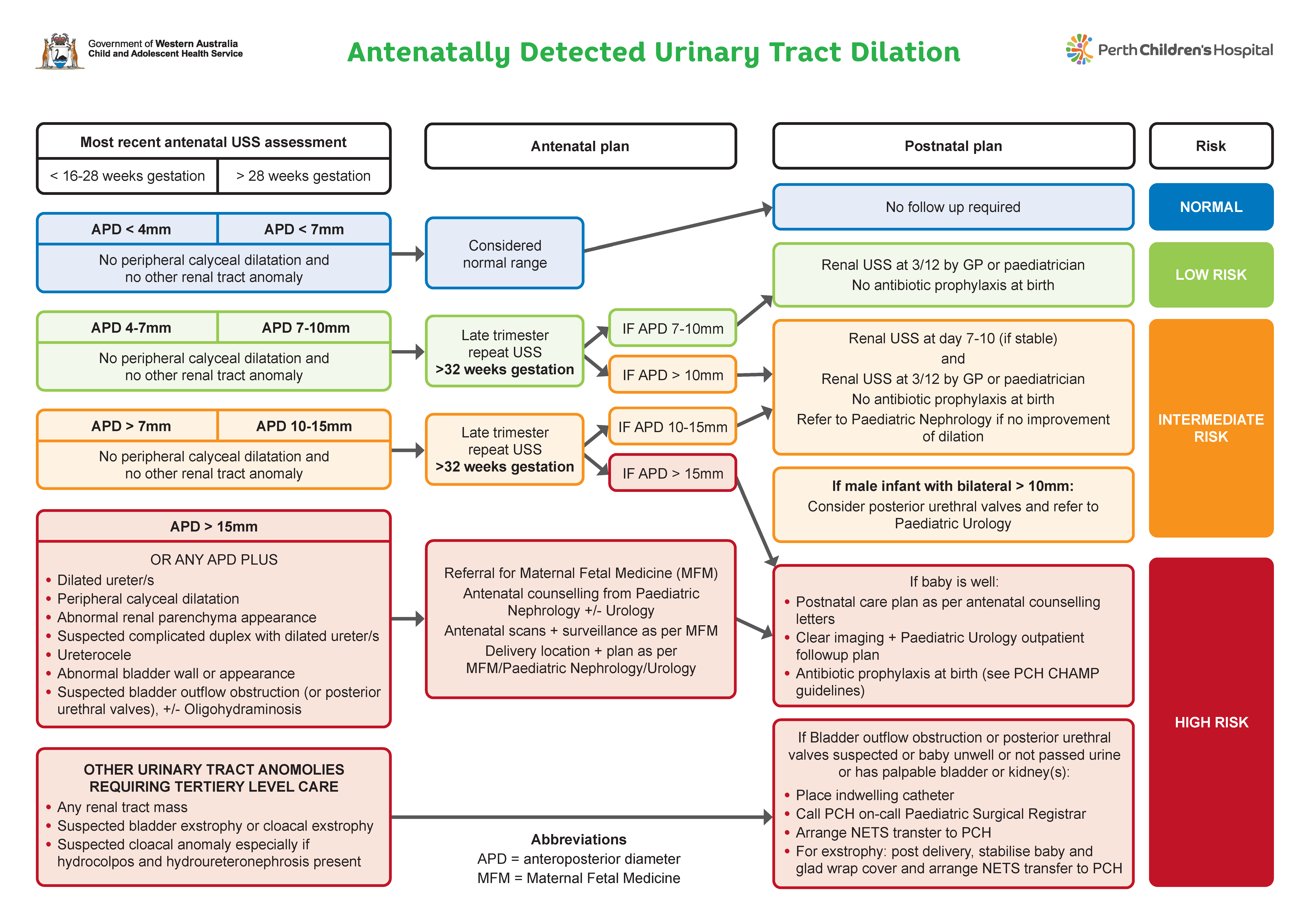
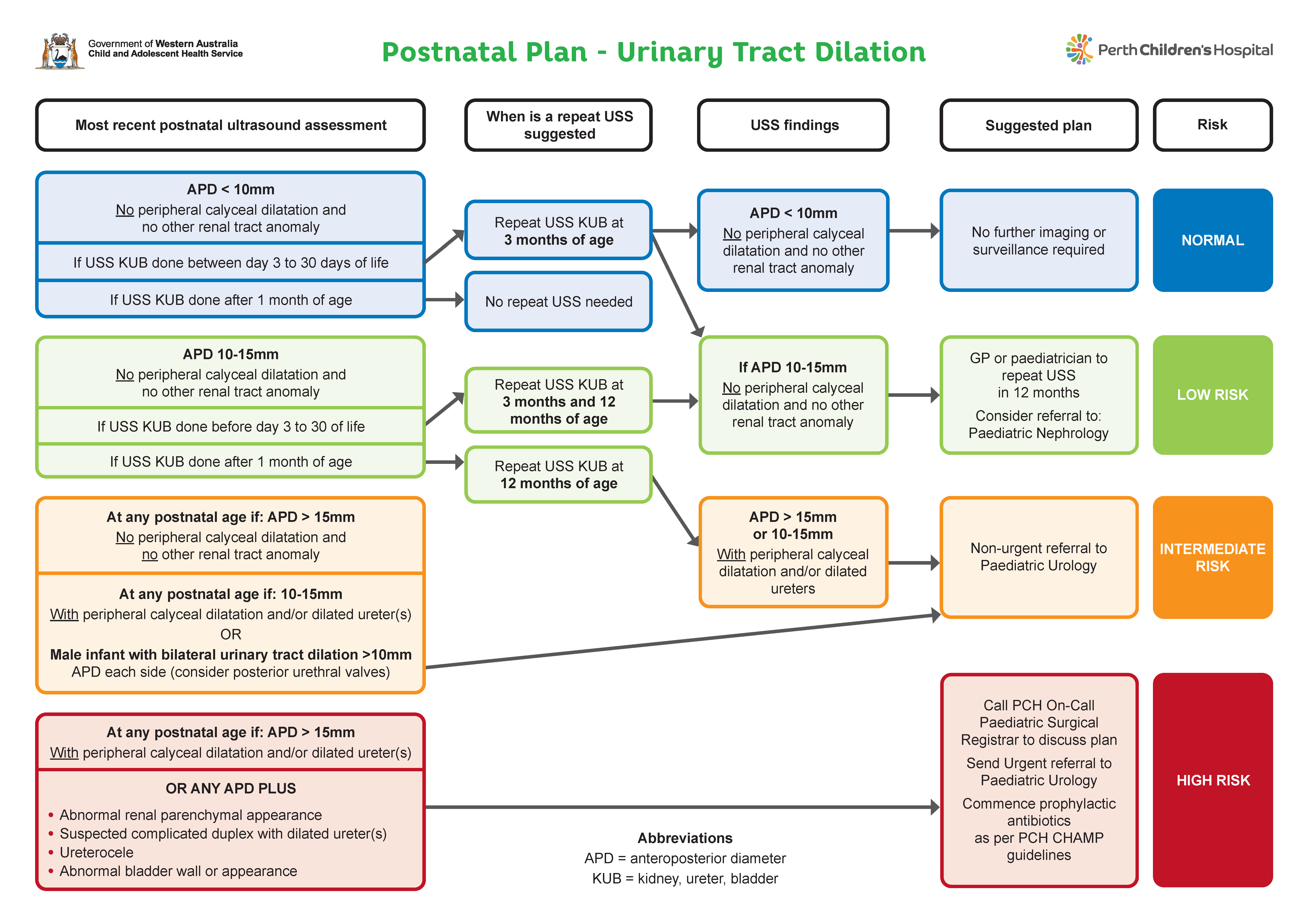
Postnatal assessment is warranted when the anterior posterior diameter (APD) exceeds 10 mm on imaging.
Pre-referral investigations, management and when to refer
Please refer to the diagrams below outlining antenatally detected UTD and the corresponding postnatal management plan. Download the flowcharts or click the images below to view at full size.
How to refer
- Routine non-urgent referrals from a GP or a Consultant should go to the Central Referral Service.
- Routine non-urgent referrals from a nurse practitioner, non-medical referrers or private hospitals go to the PCH Referral Office.
- Urgent referrals (less than seven days) are made via the PCH Referral Office. Please call PCH switchboard on 6456 2222 to discuss referral with the on-call Paediatric Surgical Registrar.
Essential information to include in your referral
- Clinical symptoms
- Relevant medical and family history
- Ultrasound results
| Reviewer/team: |
General Paediatrics-Urology |
Last reviewed: |
August 2025 |
This document can be made available in alternative formats on request for people with disability.