Cool Kids Anxiety Program

Kids Rehab WA will be offering the Cool Kids program to selected children.
The program will be run during school hours by the Kids Rehab Clinical Psychologists.
About the program
Cool Kids is a structured program that teaches children and their parents how to better manage a child's anxiety.
The program is based on Cognitive Behavioural Therapy (CBT), involves the participation of children and parents, and focuses on teaching practical skills.
Topics covered in the program include:
- Learning about anxiety
- Learning to think realistically
- Parenting an anxious child
- Facing fears using stepladders
- Learning coping skills such as relaxation or problem solving
How is the program delivered?
Cool Kids sessions will be run in-person by clinical psychologists from Perth Children's Hospital's Kids Rehab Department.
Cool Kids will involve a parent-only group and a child-only group, which run at the same time.
There will be 10 group sessions held weekly, from 10am to 11:30am on Tuesday on the following dates:
Term 3:
- 19 August
- 26 August
- 2 September
- 9 September
- 16 September
- 23 September
Followed by a 2-week school holiday break.
Term 4:
- 14 October
- 21 October
- 28 October
- No session on 4 November
- 11 November (final session, prize giving and party!)
There will be 4 families participating - i.e. the child group includes 4 children, and the parent group includes 4 parents.
Each session will run for approximately 1.5 hours.
Between sessions, children will be asked to practise skills at home.
Would my child benefit from Cool Kids?
The Cool Kids program is being offered to children whose main struggle is with anxiety.
Cool Kids covers a broad range of fears and worries including:
- Separation fears: Kids who worry that something bad will happen when separated from mum or dad. They often refuse to separate, e.g. won't go to school, sleep over at friends' houses, or be left at home with a sitter.
- Social fears: Kids who are shy and who worry about what other may think of them. They avoid social situations, performing and often have difficulty making friends.
- Specific fears: Fears of particular objects or situations like dogs or water. The fear is so bad that they avoid situations where they might come across that fear.
- Generalised anxiety: These kids are worriers. They worry about many different areas including school work, competition, family and anything new. They ask for reassurance and may feel sick, get headaches or have trouble sleeping.
What else is involved?
Prior to the group commencing, parents will be asked to complete an assessment with a psychologist via a Telehealth appointment. This will gather information about the concerns that you have for your child and will also include questionnaires about thoughts, feelings and behaviours.
Similarly, children will be asked to complete an assessment with a psychologist in a separate Telehealth appointment.
At the end of the program, you will be asked to complete the same assessments a second time so that we can track your child's progress.
Weekly overview
Session 1
- Welcome to the program
- You and your child can learn about the nature and causes of anxiety
- Discuss goals of the program
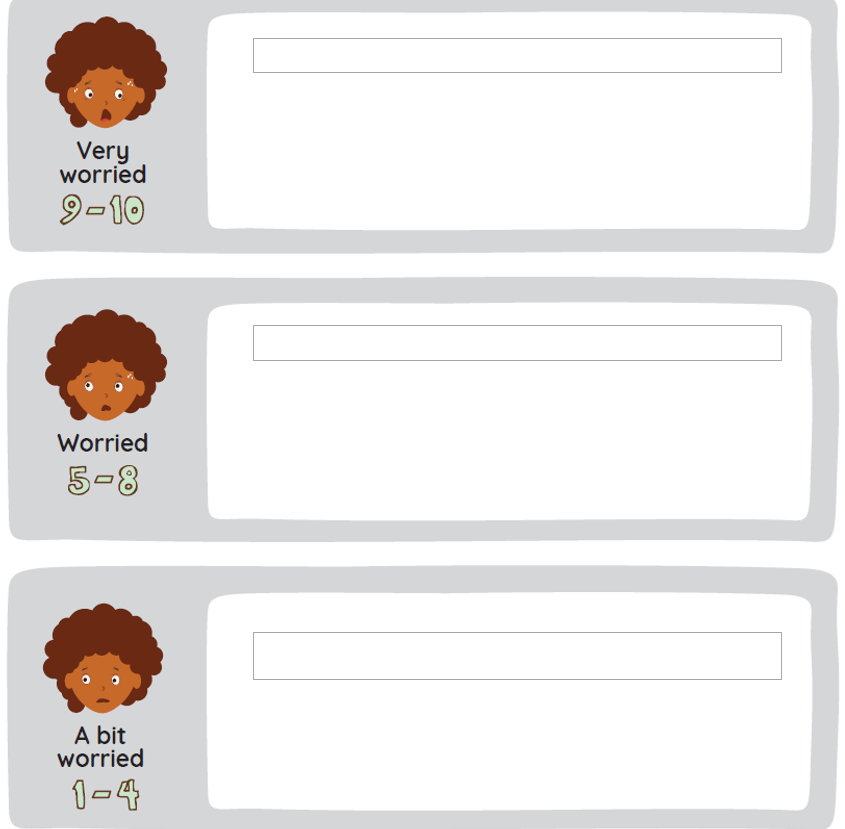
- You and your child can learn about the worry scale and links between thoughts and feelings
- Parents can learn about using rewards to encourage children’s use of Cool Kids skills
Child home practice: linking thoughts and feelings
Your child’s task is to keep track of situations where he or she feels anxious, then write down “what happened?”, “what was I thinking?”, and “what was I feeling?”.
They will also use the worry scale to show how anxious they are in the situation.
Assist your child to record these situations.
Aim to record at least 5 situations before the next session.
Child home practice: rewards menu
Help your child to complete the rewards menu.
This worksheet asks them to select a range of non-monetary small rewards that they would like to earn. You can add other ideas to the list that will work in your home. They’ve also been asked to think of a few larger rewards that they could work towards by facing their bigger fears.
The exact rewards will be negotiated from next session; for now, just write down ideas that you would be willing to supply.
Parent home practice: using rewards
Reward your child each time you see them use a Cool Kids skill spontaneously, as well as when they deliberately practise because they were reminded to.
Session 2
- Review each child’s home practise tasks (goals for the program, rewards, and linking thoughts and feelings)
- You and your child will learn about realistic (detective) thinking
- Parents will learn about potential parenting traps when supporting a child with anxiety
- There will be mini quizzes throughout the session where your child can earn prizes. They can collect these prizes in a box at PCH and take the prize box home after their final session!
Child home practice: realistic (detective) thinking
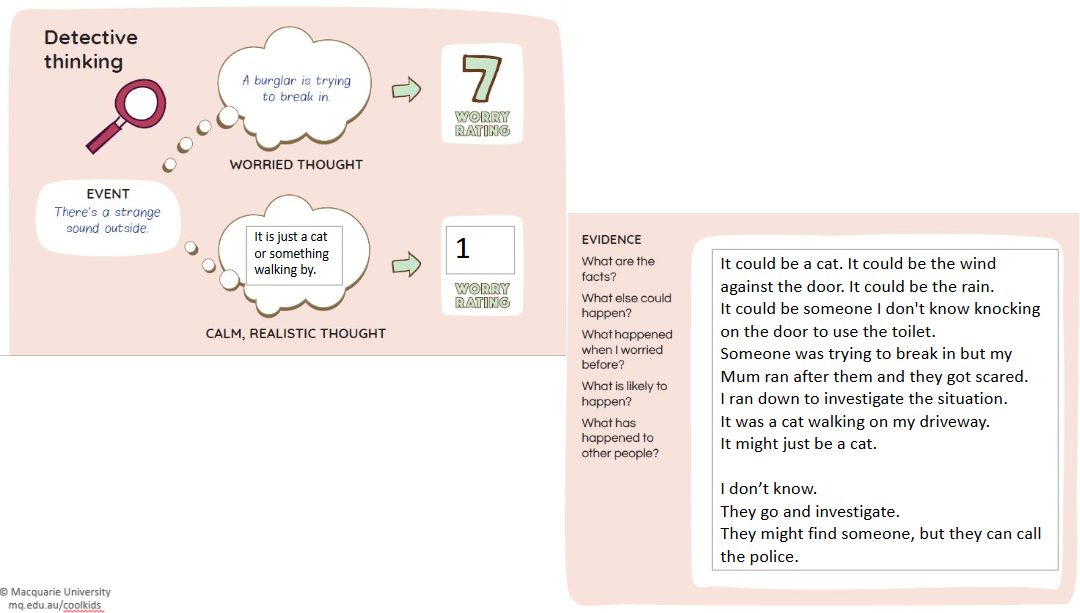
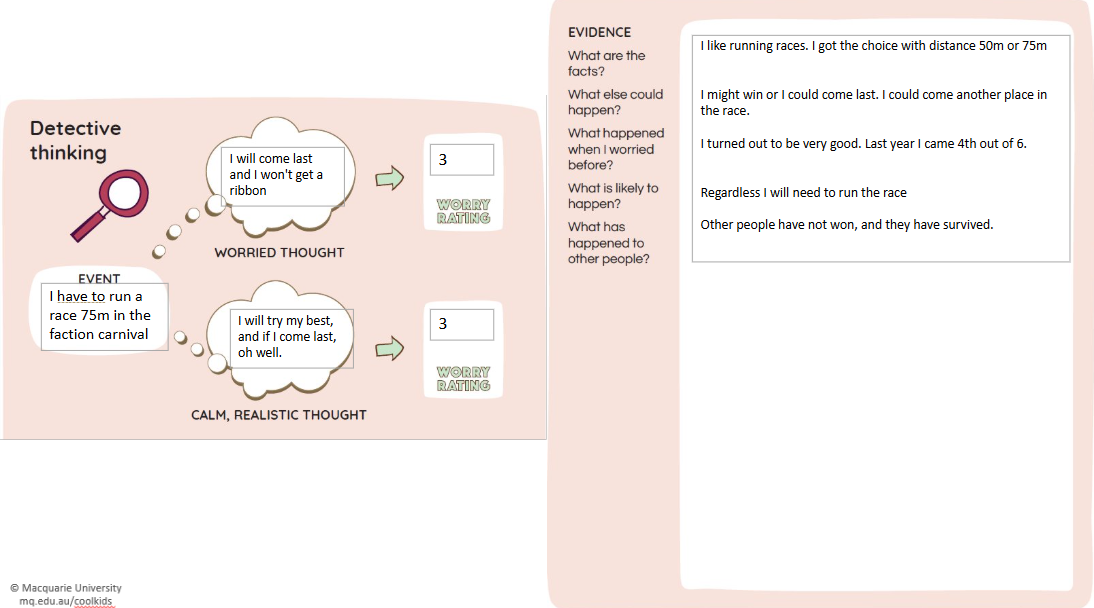
This is the first of the core anxiety management skills. Help your child to practise realistic (detective) thinking at least once every day when they first start to learn the skill. You might use realistic thinking on anxious thoughts that come up during the day or choose a situation that has happened in the past and fill out the worksheet based on what did happen. You can also use the worksheet to do realistic thinking about a situation that is going to happen in the future.
As you progress through the program, encourage your child to use realistic thinking regularly, particularly prior to facing a fear and whenever worries arise. If no new anxious thoughts arise, it can be helpful to add to the evidence you have already collected on a previous worksheet based on recent experiences.
The more you practise, the better your child will become at using this skill. If your child dislikes writing, you should talk them through the worksheet and write down the answers for them. As you start to memorise the steps, you can 'talk through' the process wherever you happen to be, like in the car on the way to school.
Here is an example of some wonderful detective thinking completed by the kids during our session this week:
Parent home practice: realistic (detective) thinking
Fill out your realistic thinking worksheet. This is designed to take you through the realistic thinking process for a situation that you find stressful. Applying this skill yourself will help you to understand the process so that you can better help and support your child.
Parent home practice: parenting traps reflection
Fill out your parenting traps worksheet. In what ways are you falling into the parenting traps described? What are the situations where you get trapped?
Session 3
- Review each child’s home practise tasks
- You and your child can learn about facing fear to fight fear
- Parents can learn about parenting strategies which are helpful for managing children’s anxiety
- There will be mini quizzes throughout the session where your child can earn prizes. They can collect these prizes in a box at PCH and take the prize box home after their final session!
Child home practice task: fears and worries list
Assist your child to add situations to the fears and worries list. The situations should be ones that they avoid or find distressing because of anxiety.
This will help us to select a goal for stepladders and to create individual steps in the next session.
Child home practice task: cool breathing
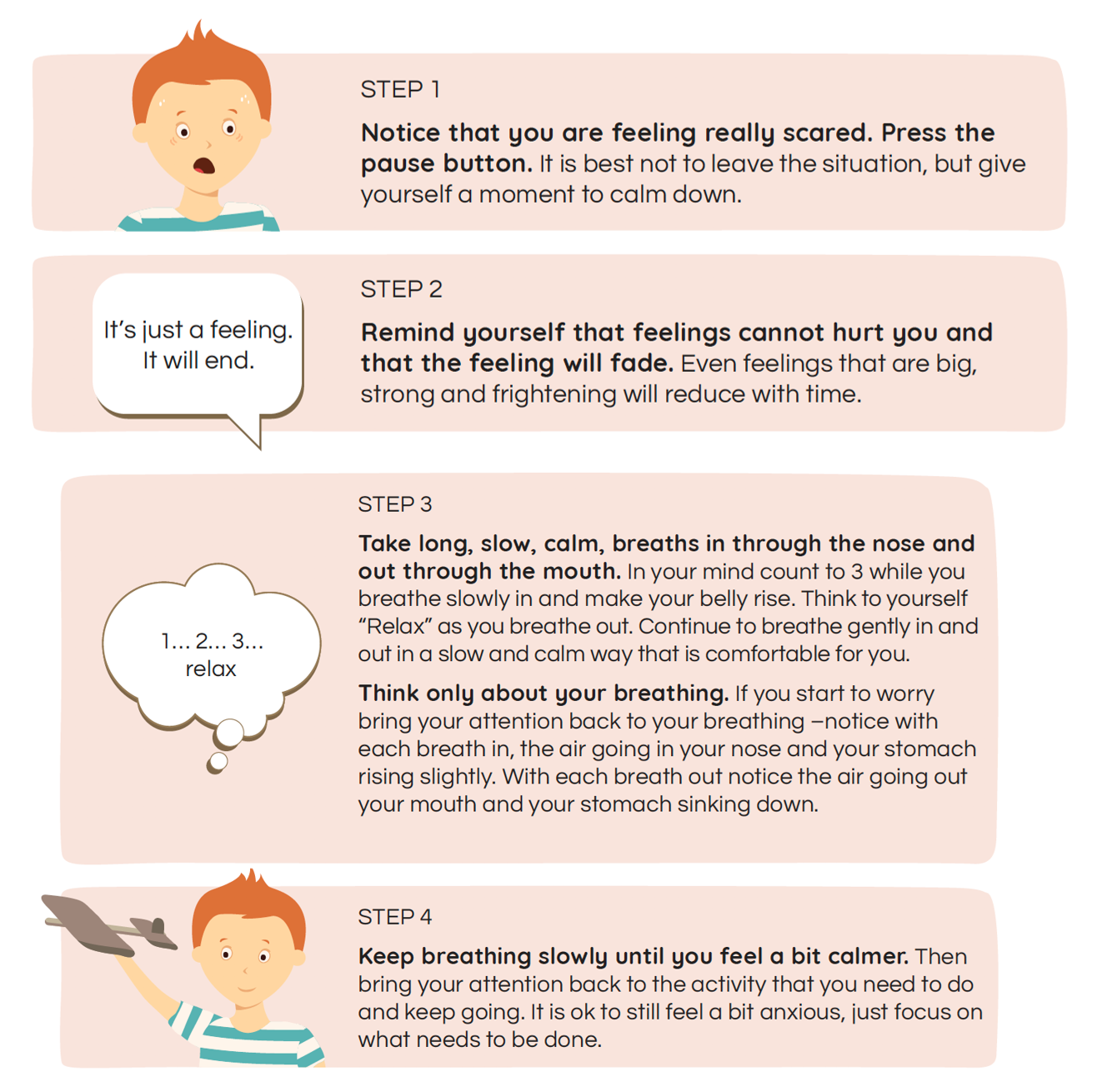
The children have learnt how to use cool breathing to calm down their nervous system when they are feeling scared or worried. We will continue to practise cool breathing each week.
Please see below for the Cool Breathing Steps to practise at home:
Child home practice: realistic (detective) thinking
Help your child to practise realistic (detective) thinking at least once every day while they learn the skill. You might use realistic thinking on anxious thoughts that come up during the day or choose a situation that has happened in the past and fill out the worksheet based on what did happen.
You can also use the worksheet to do realistic thinking about a situation that is going to happen in the future.
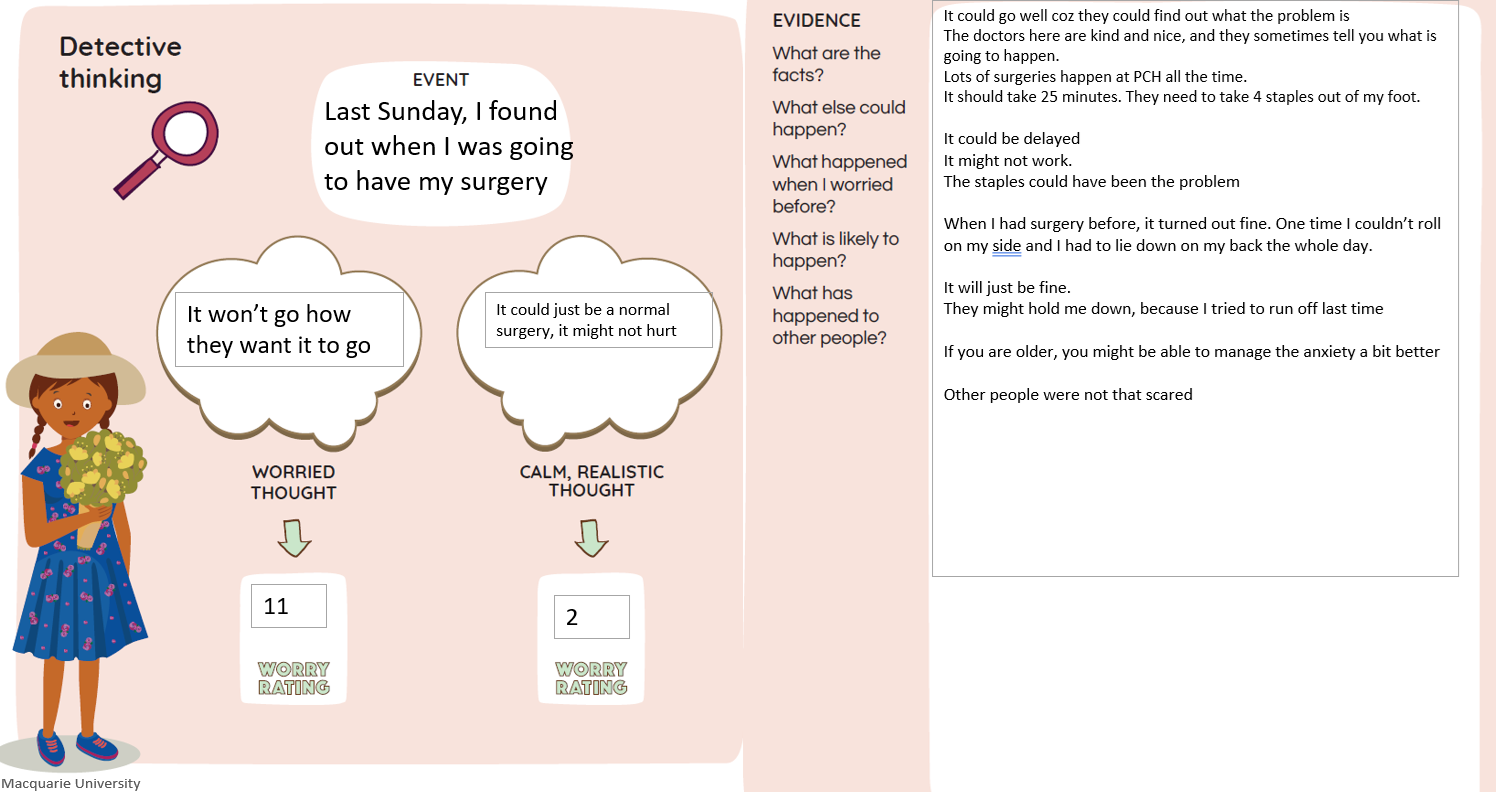
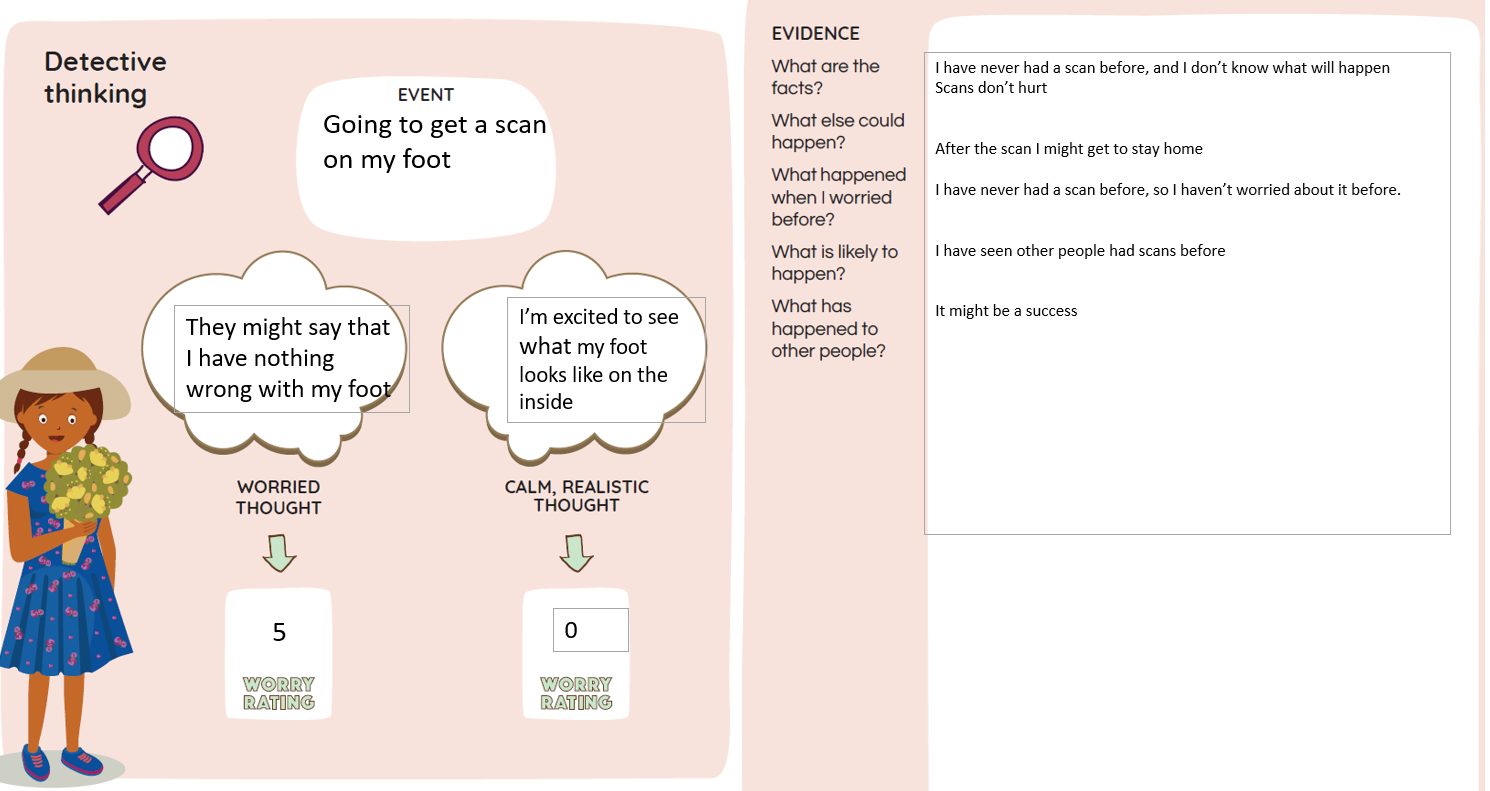
Here are some examples of some detective thinking that was completed this week for upcoming worries:
Parent home practice: parenting strategies
Practise the parenting strategy which you identified in session as likely to be helpful for decreasing your child’s anxiety in the long-term.
Session 4
- Review each child’s progress with realistic thinking and facing a small fear
- Your child will create their first stepladder
- Parents can learn about further strategies for parenting a child who experiences significant anxiety
- There will be mini quizzes throughout the session where your child can earn prizes. They will collect these prizes in their box at PCH and take the prize box home after their final session.
Child home practice: whole body relaxation
- The children developed skills to be able to help themselves relax when their whole body is feeling tight and uncomfortable.
- Whole Body Relaxation can be used in conjunction with Cool Breathing.

Child home practice: fighting fear by facing fear
It’s time for your child to start their steps. Your child can use the step planner to work out which step they will do and to record how things go.
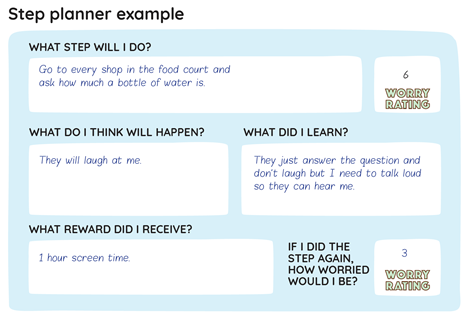
The children made a start to their step planners for this week:

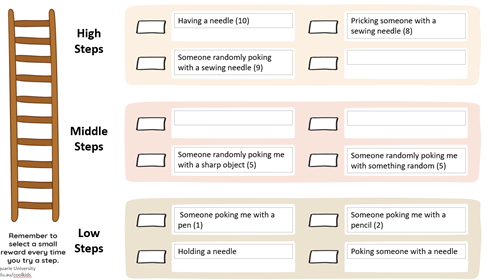
A step stays on the ladder until it doesn’t worry your child anymore. Your child will need to do each step a few times (and some steps you might need to do many times). Once the step no longer bothers your child, they can tick that step as achieved. If a step is completed, you do not need to practise it, and you can start higher steps on your ladder. Start with the low steps and work your way up to the higher steps.
Here are some examples of the stepladders that have been developed in the group and are taking shape:

Each day before your next Cool Kids session, pick one or more low steps to practise. You can also fill in a detective thinking sheet after you do an unplanned step: the more steps you try, the easier it will be to achieve your goal.
Child home practice: realistic (detective) thinking
Help your child to practise realistic (detective) thinking at least once every day while they learn the skill.
You might use realistic thinking on anxious thoughts that come up during the day or choose a situation that has happened in the past and fill out the worksheet based on what did happen. You can also use the worksheet to do realistic thinking about a situation that is going to happen in the future.
Parent home practice: parenting strategies
Using the action plan you created in session, monitor the successes and challenges you face as you implement your chosen parenting strategies for responding to anxious behaviour.
We will discuss successes and challenges in the following session.
Session 5
- Review each child’s home practise with their stepladders
- Your child can add new steps to their stepladders
- Your child can create new stepladders if needed
- You and your child can learn about taking small steps first
- There will be mini quizzes throughout the session where your child can earn prizes. They can collect these prizes in a box at PCH and take the prize box home after their final session!
Child home practice: detective thinking
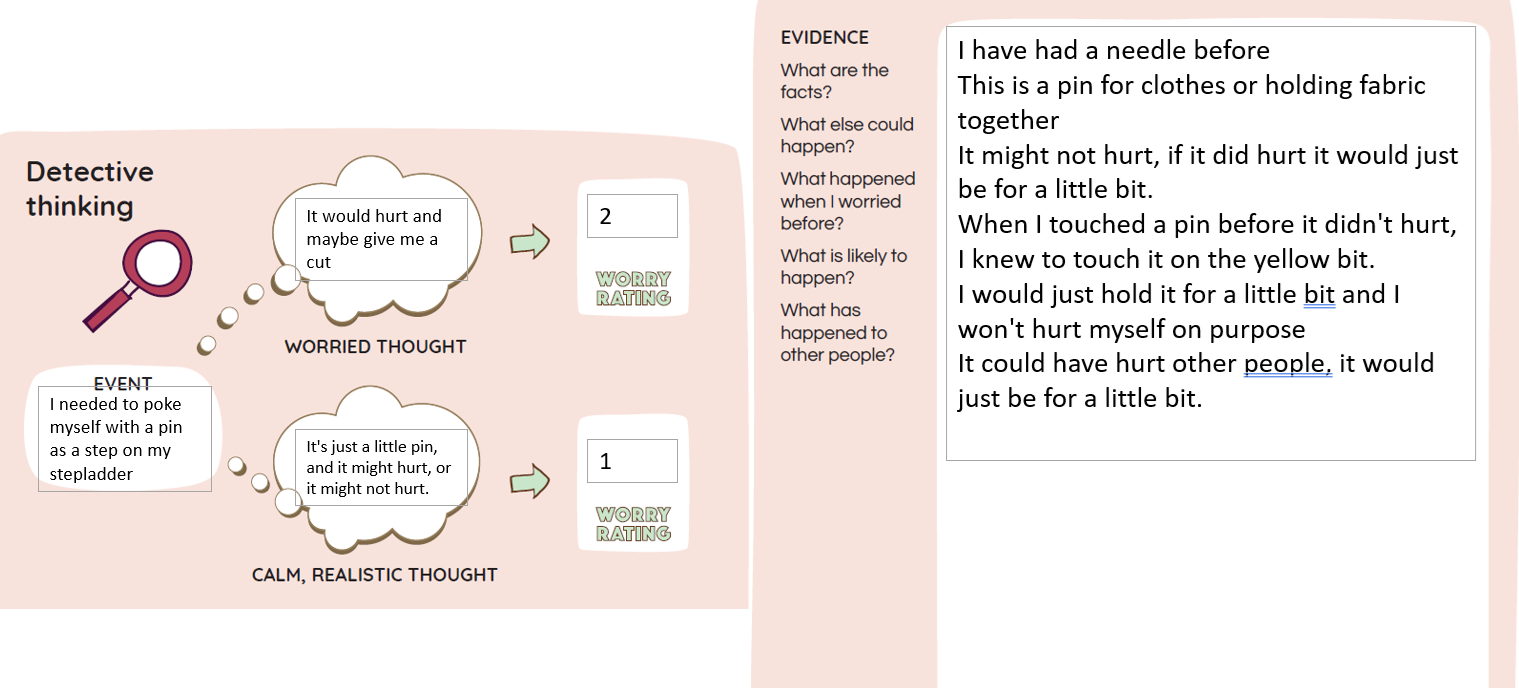
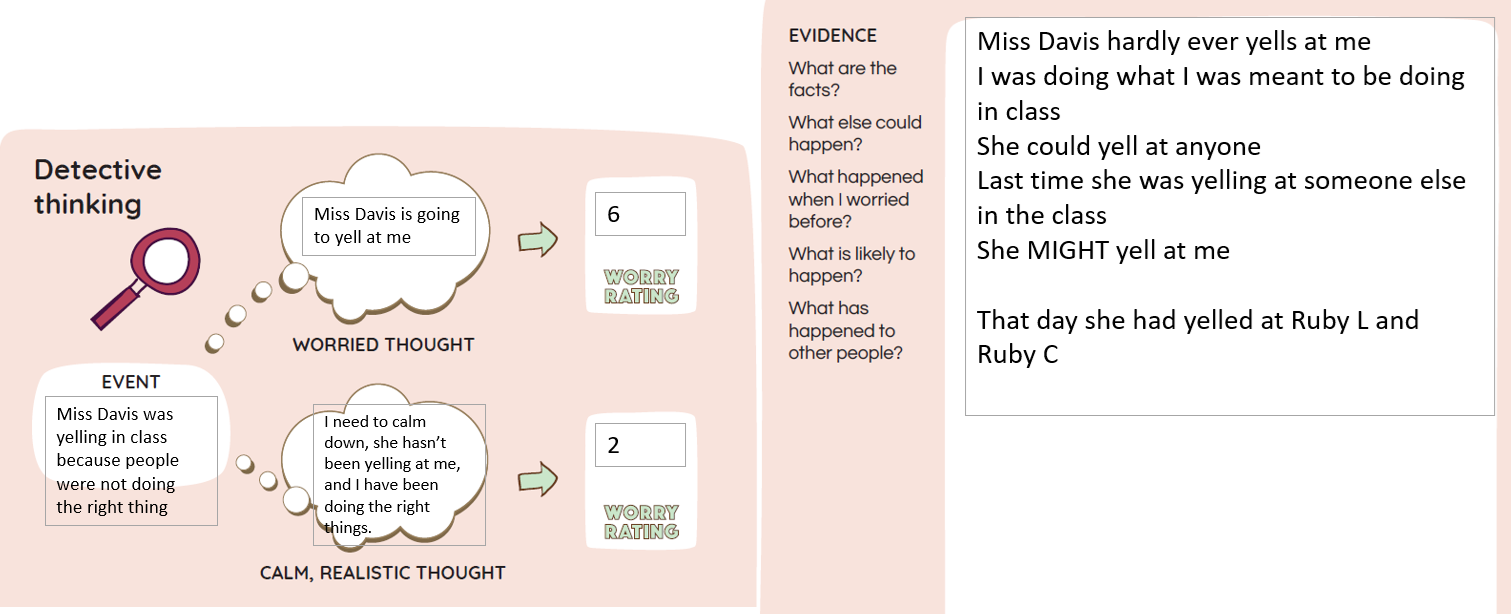
Your child can complete a detective thinking sheet before attempting their step on the stepladder. This will give your child the opportunity to work through their worried thought about the step that they are about to attempt. The aim is for your child to generate a calm/realistic thought that can help to manage their anxiety when attempting the step.
Here are examples of some detective thinking that corresponds to the steps that the children are working on:
Child home practice: start steps
Your child’s task is to keep working on their stepladders and keep practising their Cool Kids skills.
Your child should be practising every single day, and if they can, more than once per day.
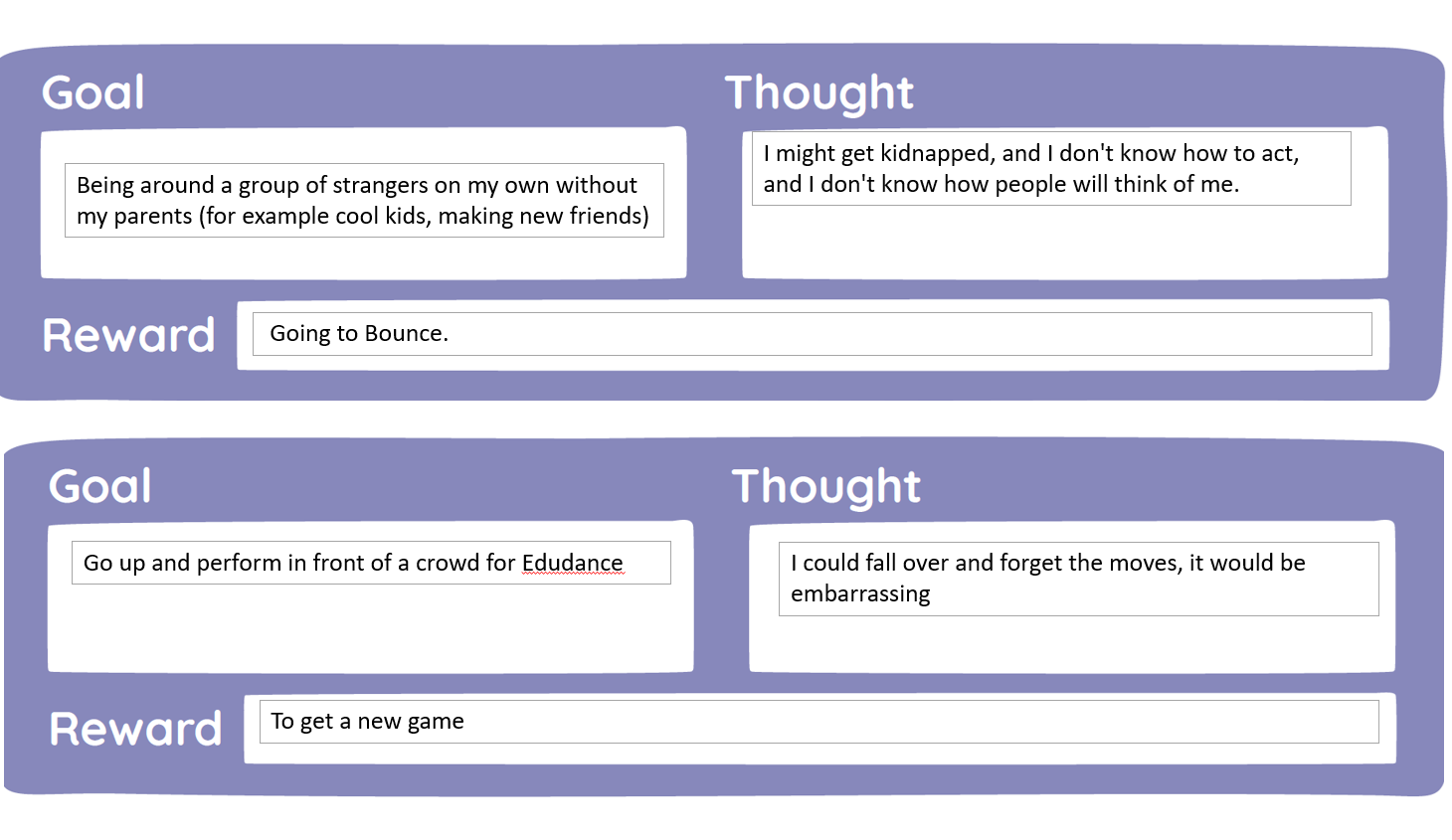
Your child is aiming to finish off the low steps on their first stepladder and then try to complete some medium steps. They can also start with the low steps on their new stepladder. They can use the step planner to work out which steps to do this week.
Here are some new stepladder goals that the children have developed this week:
Session 6
- Review each child’s home practice with their stepladders
- You and your child can learn a simplified approach to realistic thinking
- The children identified and planned the steps that they can attempt over the school holidays
- There will be mini quizzes throughout the session where your child can earn prizes. They can collect these prizes in a box at PCH and take the prize box home after their final session!
Child home practice: detective thinking
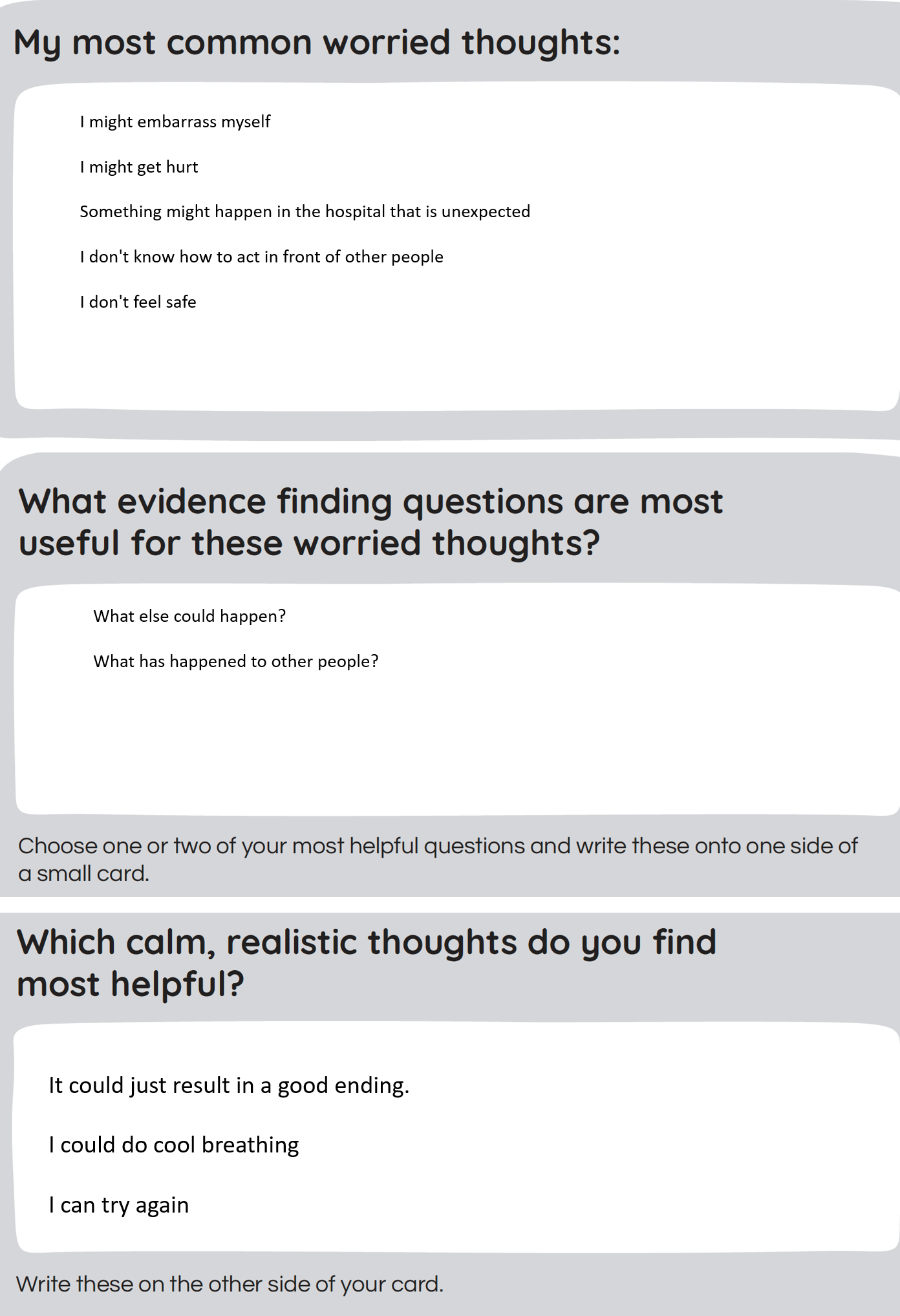
The children identified their most common worried thoughts, helpful evidence finding questions, and the calm/realistic thoughts that they find most helpful.
Feel free to print these out so that the children can have small prompts to start practising detective thinking 'in their heads' rather than relying on the worksheets in the moment.
Session 7
- Review each child’s home practice with their stepladders
- Your child can revise their stepladder and troubleshoot any challenges
- In session exposure - your child will be attempting a step of their stepladder with the support of the group at PCH. They can collect these prizes in a box at PCH and take the prize box home after their final session!
Child home practice: Continue steps
Your child’s task is to keep working on their stepladders and keep practicing their Cool Kids skills, including detective thinking.
Your child should be practicing every single day, and if they can, more than once per day.
Before the next session they should aim to finish off their medium steps and then try to complete some high steps.
They can use the step planner to work out which steps to do this week.
Session 8
- Second in-session exposure – your child will be attempting another step on their stepladder with the support of the group at PCH.
- They will earn a prize for their hard work in challenging their worried thoughts and working through their anxiety. They can collect these prizes in a box at PCH and take the prize box home after their final session.
Child home practice: Continue steps
Your child’s task is to keep working on their stepladders and keep practicing their Cool Kids skills, including detective thinking.
Your child should be practicing every single day, and if they can, more than once per day.
Before the next session they should aim to finish off their medium steps and then try to complete some high steps.
They can use the step planner to work out which steps to do this week.
What if I have questions?
If you would like to discuss Cool Kids please contact Jessie Parham, Senior Clinical Psychologist
Phone: 08 6456 5192
Email: jessie.parham@health.wa.gov.au

Jessie Parham, Daphne Su, and Sarah Sayers are accredited by Macquarie University’s Centre for Emotional Health to use the Cool Kids program. The intellectual property rights, including copyright, in the Program are owned by Macquarie University. Macquarie University does not endorse any particular provider of the program and their other services.